
AI in Manufacturing: Smart Factories Explained
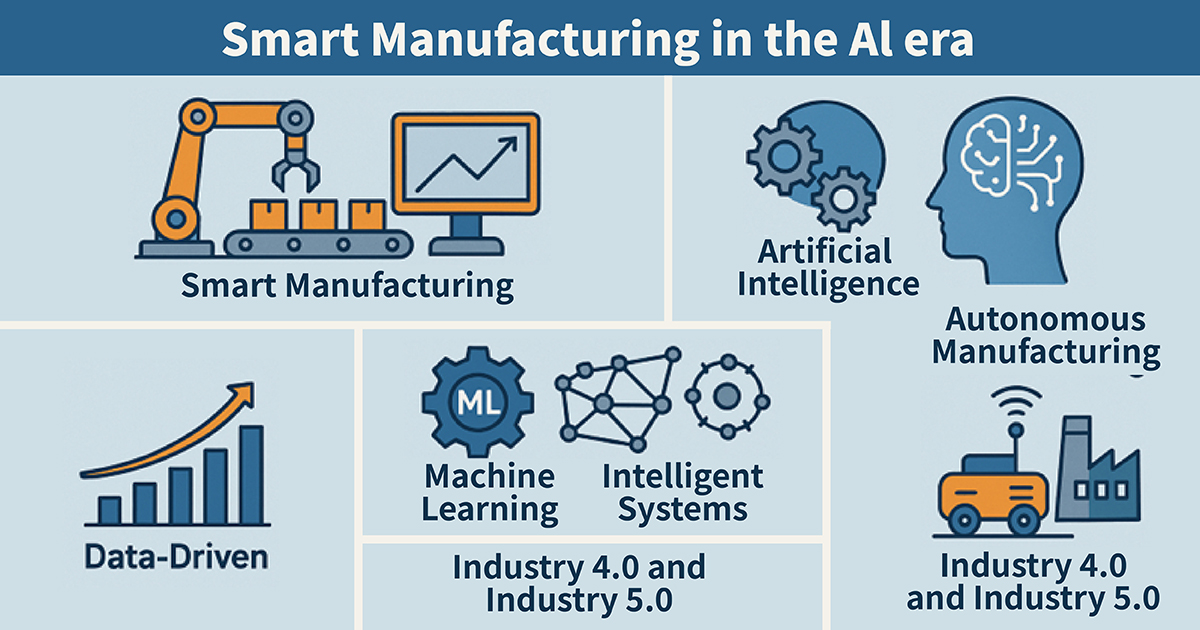
The revolution brought about by AI in Manufacturing is altering the face of manufacturing since the traditional factories are being transformed to smart factories, which are intelligent and data-driven. These plants combine related machines, robotics, predictive analytics and artificial intelligence to optimize production and automate multifaceted tasks.
The ability to analyze large amounts of data in real time enhances efficiency, quality control and supply chain management by manufacturers. With the rapid digitalization, AI is emerging as a necessity to establishing flexible, efficient, and competitive production systems in the global arena.
Understanding AI in Manufacturing
Artificial intelligence can be described as computer systems introduced to execute functions that are traditionally performed by the human intelligence. These activities are pattern recognition, decision making and data analysis. Within the manufacturing sector, AI systems process the data about production, monitor the work of machines, and recognize the trends, which can be used to enhance the operations.
Sensors, machines, and production lines produce enormous volumes of data daily for manufacturers. This data is processed with the help of AI technologies to define inefficiencies, predict equipment failures, and suggest improvements. This is among the powerful AI advantages on the manufacturing side since it enables a transformation of raw data into actionable information.
Once the companies apply AI in their production process, they can automate the routine work and provide effective overall operation. The machines powered by AI can predict issues before they emerge as major challenges and reduce downtime and improve the quality of products.
What Are Smart Factories?
The intelligent factories mark the future of modern-day industry manufacturing and automation. These factories apply artificial intelligence, automation, data analytics, and connected devices in order to improve efficiency in manufacturing. The machine communicates with one another in digital networks and sensors continuously collect the worthwhile production information.
The AI systems analyze this information to automatize workflows, improve decision-making, and become more productive. The smart factories do not require long to change the production and respond to fluctuations in demand unlike the traditional factories. It also allows managers to monitor the operations in real-time and can identify the bottlenecks and make accurate decisions which are made using the data.
Predictive Maintenance and Equipment Reliability
One application of AI that comes in handy in the production sector is predictive maintenance. Traditional manufacturing can be found in such a way that machines are being serviced in a predetermined manner. Although such a strategy will not cause all failures, it can also result in unnecessary maintenance or unforeseen failures.
Predictive maintenance systems are AI-based systems that process machine sensor data to identify wear or malfunction. Maintaining control over when to conduct maintenance will help the manufacturers to avoid expensive equipment failure because they can easily detect possible issues before they arise.
Predictive maintenance helps the companies to save on downtime, extend the lifespan of equipment and also reduce the maintenance cost. Manufacturers can take up the proactive measures to ensure that their production systems are in fine operation, and not react to an issue once it occurs. Such a strategy is also better in the safety aspect as it is less likely to experience sudden failures of the machines that may expose the workers to danger.
Quality Control and Defect Detection
The current manufacturing is enhancing quality control and defect detection through AI. Computer vision systems combine cameras and machine learning to scan products rapidly and effectively, detecting any defect that could be missed by a human inspector. The early detection helps in minimizing wastage of production and only high-quality products are delivered to the customers.
Such AI applications also include the analysis of production data to determine the root causes of defects. This understanding assists manufacturers in making modifications in processes, the same quality of the products, and improving efficiency in the large-scale production operations.
Supply Chain Optimization
In current production, AI is enhancing the optimization of the supply chain. Demand forecasts, inventory, logistics data, and supplier performance are analyzed by the intelligent systems to aid in making improved procurement and planning decisions.
Forecasting with AI will allow AI in manufacturing to know what is in demand and minimize overproduction and inventory losses. Such systems are also capable of identifying possible supply chain failures and offering alternatives, including changing production, or obtaining suppliers, so that operations become more efficient.
Robotics and Automation in Smart Factories
Robotics are not the biggest discovery in the manufacturing industries, but industrial robots are getting cleverer and more adaptable through the assistance of AI. In the conventional robots, repetitive tasks are usually carried out according to a fixed set of instructions. AI-driven robots, in their turn, are able to adjust to the new circumstances and experience.
The intelligent robots can execute complicated duties including assembling sensitive parts, sorting goods, and cooperating with human laborers. The robots in smart factories tend to be used in partnership with the human workers in a joint workplace.
Artificial intelligence helps robots to explore the surrounding world and recognize objects and alter their behaviour. This flexibility enables one to carry out tasks, that were challenging or impossible to automate a couple of years back. Artificial intelligence could be deployed with robotics to ensure that manufacturers become more productive and at the same time have reduced operational costs.
Data-Driven Decision Making
AI in Manufacturing helps to transform large amounts of production data into useful information. AI systems that track the processes in smart factories recognize the possibilities to be improved. These insights facilitate improved production planning, resource allocation and maximization of processes.
The transparency of the operations provided by data-driven decision making also aid companies to monitor the performance of the company, identify inefficiencies and quickly develop the processes and enhance the overall productivity.
Challenges in Implementing AI in Manufacturing
The adoption of AI in manufacturing industry is known to be a difficult undertaking. Most factories continue to use old systems that cannot be integrated with the current AI technologies. The implementation of AI can be very expensive, typically involving huge investments in infrastructure, programs, and employee education.
Another obstacle is data management because AIs require high-quality and secure data to provide correct insights. However, those firms that can, eliminate such barriers will be able to increase their efficiency, productivity, and competitive abilities in long term.
The Future of Smart Factories
Artificial intelligence and digital technologies are going to gain more influence in the future of manufacturing. The future of smart factories will always continue to develop through the advancement and availability of AI systems.
The emerging technologies such as digital twins, advanced robotics, and real-time analytics will give even more capabilities to smart factories. These innovations will make the manufacturers be able to redefine production processes, focus operations and respond quickly to market variations.
AI will also help in sustainable production in a great way. AI can also help the manufacturers achieve their environmental goals by fully optimizing the use of energy, reducing waste, and improving resource efficiency. Due to the use of AI-driven solutions by industries, smart factories will become the norm of the new form of manufacturing.
Conclusion
The adoption of AI in manufacturing process is causing a significant revolution in the production of industries. Other technologies like predictive maintenance, robotics, quality control and optimization of supply chain are enhancing efficiency and cost reduction as well as improving the quality of products. Organisations that adopt AI have high competitive advantage.
The additional advancement of AI as a technology will help in enhancing the productivity, sustainability, and innovation of smart factories, where more opportunities are available to grow and influence the future of industrial production on the global scale. Join the Cyprus AI Expo to meet AI leaders from around the world. Visit Cyprus AI Expo to secure your place today. https://www.cyprusaiexpo.com/