
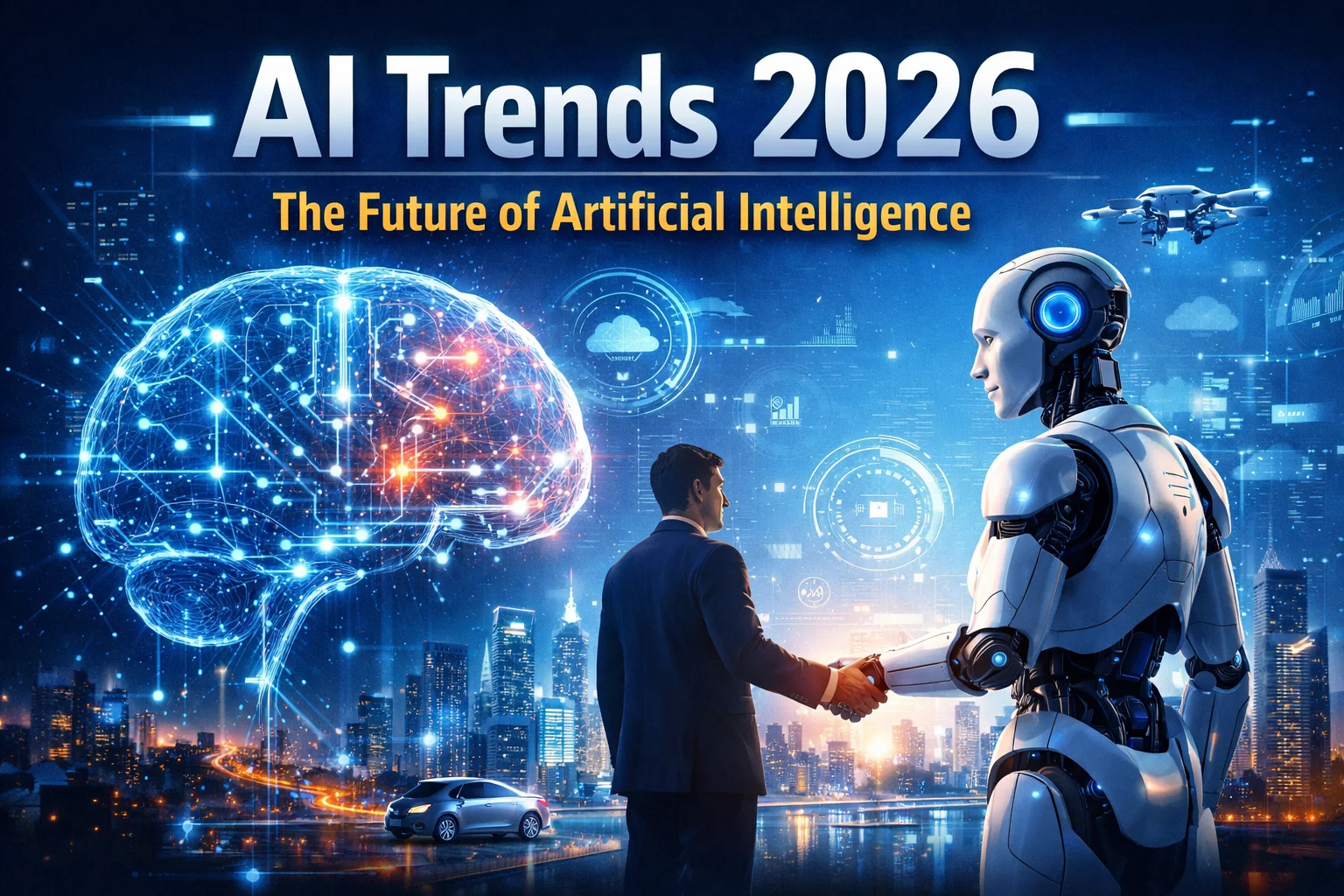
AI Tech Exhibition Trends to Watch in 2026
The rapid evolution of artificial intelligence continues to alter the industries in the world and 2026 is another thrilling year of artificial intelligence. The AI Technology Exhibitions are a special occasion when corporations, start-ups, researchers, and policymakers gather to present the breakthroughs, debate, and contemplate the opportunities. These events are not about product exhibitions anymore it has turned into a strategic place where the future of AI is formulated, discussed, and expedited.
In 2026, the exhibitions of AI technology are predicted to focus on the real-world impact, specific applications, and collaboration across industries. No longer do attendees arrive to see, rather they are looking to experience and be immersed in how AI solutions can be used to improve operations, customer experiences, and be more sustainable. Through such exhibitions, startups get space to attract investment, businesses get a chance to identify scalable solutions and governments get to demonstrate their policy frameworks to support the use of AI.
Emphasis on Generative AI and Creativity
Among the most noticeable tendencies during the exhibitions of AI technologies in 2026, the emphasis on generative AI is present. Exhibitors are showing applications of automated content creation and design as well as music composition and video generation. The use of generative AI is no longer an imaginary notion, and it is being actively applied to various industries including marketing, entertainment, and product design.
Interactive exhibitions enable visitors to experience generative AI, real-time testing algorithms and exploring outputs. Such practical solution is going to involve the audience and emphasize the practical business value of AI solutions. Exhibitions on AI technology are seeking to fill the gap between the state-of-the-art research and practical enterprise applications.
Hybrid and Immersive Experiences
The 2026 AI exhibitions are increasingly immersive and have a hybrid touch. The virtual, augmented reality technologies enable the remote attendees to engage in the demonstrations, panels, and workshops in a manner that they are actually there. This mixed model increases accessibility to more people and offers access to international talent and capital.
Interactive kiosks, overlaid realities, and artificial intelligence-driven simulations help attendees to intuitively get to know complicated technologies. Exhibitions improve learning and engagement by creating visual and interactive experiences of the abstract concepts of AI, therefore, making technology adoption an easier process to non-technical decision-makers.
Focus on Industry-Specific Solutions
The AI Technology Exhibitions are shifting towards a generalized display to specialized ones, industry-specific. The medical, banking, retail, logistics, and production industries need broader solutions to AI. Exhibitors showcase applications like predictive maintenance in the manufacturing industry, fraud detection in the finance sector, personalized patient treatment in the medical sector, and optimization in supply chain in the retail and logistics industry.
This industry-focused perspective is relevant such that the attendees go home with something practical. Instead of a set of tools, exhibitions today focus on the use of AI in addressing practical business issues, which result in a higher ROI of both exhibitors and visitors.
AI Ethics and Governance
As the use of AI increases, there is an increase in the scrutiny of both ethics and governance. In 2026, all the exhibitions include panels and workshops on responsible AI practices, bias mitigation, data privacy, and regulatory compliance.
Stakeholders talk about new European systems of AI ethics and international standards and best practices of enterprise implementation. Through incorporation of these issues in exhibitions, the organizers will make innovation something responsible and will maintain balance between creativity and responsibility. The companies are more and more evaluated not just based on technological skills, but also based on the ethical approach to the use of AI.
Startup Ecosystem Showcases
AI Technology Exhibition have gained significant importance to facilitate the innovation of startups. Special areas enable young firms to present ideas, show prototypes and meet investors. Startups are brought into the limelight and acquire strategic investors, and investors belittle to high-potential ventures.
In 2026, these exhibitions continue to revolve around mentorship programs and accelerator alliances and live pitching competitions. They are the sources of innovation and the stimulators of entrepreneurship and AI disruption of the new generation.
Embracing Edge AI and IoT Integration
It can be projected that edge AI and IoT integration will take up most of the demonstrations in AI Technology Exhibitions in 2026. That is where edge computing enables AI algorithms to operate on local hardware and provides real-time information in healthcare, automation in industry, smart cities, and transportation.
Exhibitors emphasize that there is a need to reduce latency and do processing locally. The interactive sessions demonstrate how IoT sensors get real-time data, which AI systems examine on-site to optimize operations. The theme is that AI is increasingly becoming a part of the infrastructure and the operations of the enterprise.
Sustainability and Green AI
The topic of sustainability is becoming more popular in AI Technology Exhibitions. Green data centers, energy-saving AI hardware and AI-based environmental monitoring applications are mentioned. Businesses are already showing the possibilities of AI to maximize energy use, minimize waste, and make business operations more sustainable.
These showcases are what exhibitions are relying on to highlight that responsible adoption of technology goes beyond ethics to influence on the environment. Green AI policies are appealing among policymakers and investors as well as leaders of enterprise who want to achieve sustainability interests and remain competitive.
Collaborative Innovation and Networking
In 2026, AI Technology Exhibitions give high priority to collaboration. These matchmaking, roundtable discussions, and mentorship programs also increase networking opportunities. The players are given a chance to reach out to technology partners, enterprise decision-makers, investors and regulatory professionals.
Problem-solving across disciplines is encouraged in collaborative spaces and co-innovation. Exhibitors, startups and visitors are more likely to engage in combined experiments, pilot projects and workshops to deploy solutions faster and test them. Networking is no longer an incident, it is one of the key aspects promoting long-term impact on the industry.
Educational Workshops and Skill Development
AI Technology Exhibitions are based on learning opportunities. Machine learning, natural language processing, computer vision and AI operations workshops offer practical experience to the participants.
Through these sessions, the participants can upskill and learn new frameworks and apply the technologies in their respective organizations. Learning activities also guarantee that adoption of AI is not conceptual but practical, as it fills the gap between testing and enterprise integration.
Investment Trends and Market Insights
Critical market intelligence is also obtained during AI Technology Exhibitions. Analysts, investors, and enterprise leaders provide information on the new trends in investments, capital inflow, and increase forecasts in the industry.
The insights can give the attendees the idea of where AI markets are growing, in which areas are being invested, and how the regulatory environments can influence adoption. Exhibitions emerge as a tactical place of harmonizing investment priorities and opportunities of innovation.
The Future Outlook for AI Technology Exhibitions
Within the field of AI technology, in the future, the exposition will become more interactive, global, and industry-oriented. The future will be characterized by hybrid experiences, ethical and sustainable practices in AI, and practical demonstrations.
Fresh trends including autonomous AI agents, multimodal AI systems, and advanced edge computing applications will determine exhibition content. The stakeholders will also be in search of inspiration and actionable insights, and thus the events will still continue to be a major platform of transforming the industry.
Conclusion
AI Technology Exhibitions 2026 aren’t simply a product display but are selling opportunities that are strategic in nature and impact the future of the AI ecosystem. From generative AI and edge computing to ethical governance and sustainability, these events show invention, practical operations, and industry collaboration.
Attendees gain exposure to emerging trends, share in interactive demonstrations, and engage with study leaders, investors, and incipiency authors. By blending networking, literacy, and invention, AI Technology Exhibitions help associations borrow AI responsibly and effectively.
In Europe and encyclopedically, the success of these events highlights the significance of connecting technology, business strategy, and mortal creativity. For enterprises, startups, and policymakers alike, sharing in an AI Technology Exhibition provides both alleviation and practical insights, situating them at the vanguard of the fleetly evolving AI geography.