
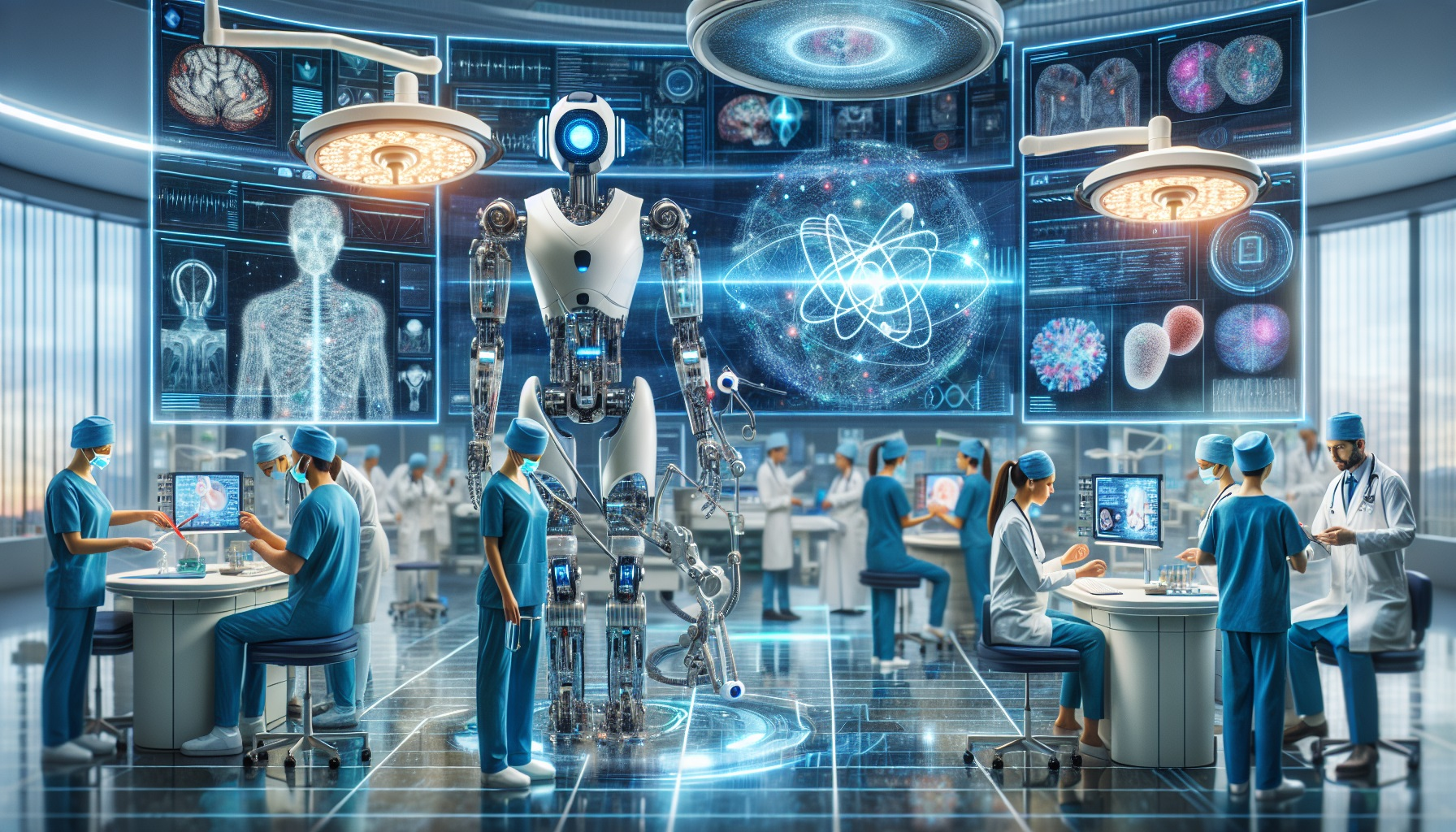
Visual AI in Healthcare and Manufacturing
The fast development of the Visual AI is changing the sphere where the analysis of visuals is crucial, surveillance mechanisms, and decision-making that requires certain precision. Visual AI is a combination of computer vision, deep learning, and pattern recognition that is used to interpret images and video streams with great accuracy. Modern AI systems are not just able to take visual data, but interpret and analyze it.
Healthcare and manufacturing are two industries in which this transformation stands out the most. Visual precision has a direct effect on safety, quality, and efficiency of operation in both industries.
How Visual AI Works
Convolutional neural networks are the common deep learning architectures of Visual AI systems. These models are trained using massive image data to be able to identify patterns, objects and anomalies. Visual AI is able to learn through examples and gets better as time goes by unlike the traditional rule-based image processing systems.
The infrastructural needs of training and implementing these AI models are scalable to cloud-based services such as Amazon Web Services and Microsoft Azure. This enables organizations to handle large quantities of the visual data with ease and safety.
Visual AI in Healthcare Diagnostics
Healthcare produces vast visual information each day in the form of X-rays, MRIs, CT scans, ultrasounds, and pathology slides. Manual analysis of these images may take time and also result in human errors. Visual AI can help radiologists and other healthcare professionals with detecting abnormalities and marking zones that need a further analysis.
To facilitate clinical processes, medical technology firms like Siemens Healthineers and IBM Watson Health created AI-assisted imaging systems to improve processes in healthcare. These systems are able to increase accuracy in diagnoses and decrease turnaround times.
Visual AI can improve patient outcomes and provide a better treatment plan because it can identify tumors, fractures, infections, and abnormalities in organs at earlier stages.
Early Disease Detection and Preventive Care
Early disease diagnosis has turned out to be one of the most effective uses of Visual AI in healthcare. Machine learning models that are trained on retinal images are able to identify diabetic retinopathy at an early stage when symptoms are not serious. Equally, AI algorithms on skin images have the ability to detect skin cancer in its early stages.
This capability to identify small patterns that could be challenging to the human eye to identify is useful in preventive medicine and lowers the overall care expenses. With early intervention, more patients have been saved and their life enhanced.
Visual AI in Surgery and Remote Healthcare
AI-based imaging systems in the contemporary operating rooms supply surgeons with real time assistance. They detect body structures and provide accuracy when performing a procedure. Visual AI when incorporated into robotic surgical systems enhances accuracy and complicates minimization.
Visual AI is also helpful on telemedicine sites. In the case of remote consultations, AI systems may be used to process video feeds and help physicians to evaluate observable symptoms or motion patterns. This aids in the provision of healthcare services in rural and underserved areas where the specialists can be scarce.
Visual AI in Manufacturing Quality Control
The production facilities strongly depend on inspection and quality assurance. In the past the human inspectors used to check products on defects but this procedure is inconsistent and slow. Visual AI is a technology that automates the inspection process based on the high-resolution cameras and deep learning models to identify the defects in real time.
General Electric and Bosch are some of the companies that have installed AI-based visual inspection systems on the production lines. Such systems are able to detect cracks, misalignments, scratches and errors during assembly at higher speed and accuracy than manual systems.
Predictive Maintenance and Operational Efficiency
Visual AI is important in the surveillance of machines and industrial tools. AI systems have the ability to identify the presence of early wear, vibration issues or overheating by analyzing video feeds, sensor feeds, and thermal imaging data prior to failures. This predictive potential goes a long way to minimize unforeseen downtimes and lengthens the lifespan of important assets.
Computer vision models are used to check manufacturing lines in a manufacturing environment in order to detect defects and performance anomalies. Real-time notification helps the maintenance departments to be proactive and reduce the costly delays and enhance overall productivity.
Switching to smart factories requires a strong focus on the visual monitoring systems that cannot be exhausted and provide uniform control and information. These AI solutions are integrated with IoT platforms and analytics dashboards and are used to streamline operations, increase compliance with safety, and assist in scalable industrial automation strategies.
Worker Safety and Compliance Monitoring
The industrial setting is prone to safety hazards. Visual AI applications track the live camera images to make sure that the workers adhere to safety measures, including using protective equipment or staying out of restricted areas.
Real time notifications assist in avoiding accidents as well as provide compliance with regulations. With this smart tracking, it becomes easier to increase safety in the workplace and minimize the number of people who have to monitor the processes manually.
Benefits Across Healthcare and Manufacturing
Healthcare and manufacturing industries may have not many similarities, yet the similarities of the advantages of adopting Visual AI are equally relevant to both. These benefits are more accurate analysis, shorter decision-making time, high productivity and low costs of operation.
Visual AI makes the organizations efficient on the scale of operations without downgrading the quality standards, compliance, and safety standards. AI systems improve human work in addition to automated systems by converting visual information to actionable insights. In medicine, it helps to accurately diagnose patients and plan their treatments on time.
It enhances quality control and monitoring of equipment in manufacturing. Also, Visual AI enhances detection of risks, simplifies regulatory reports, promotes real-time visibility of all operations, and contributes to data-driven innovation approaches that build long-term organizational resilience and competitive edge.
Challenges and Considerations
Visual AI implementation should be put into consideration despite its benefits. Strict regulations of data privacy have to be adhered to by healthcare organizations. The initial cost of the advanced imaging systems and AI integration could be very high in manufacturing companies.
Also, the models of AI should be trained with the help of a variety of data to be unbiased and provide credible outcomes. Sustainable adoption requires responsible deployment, constant monitoring, and robust cybersecurity.
The Future of Visual AI
The future development of Visual AI is strongly associated with edge computing and real-time analytics development. Edge AI enables visual processing to be performed at the device level, and it eliminates latency, enhancing responsiveness.
The application of AI-assisted diagnostics in the healthcare sector will become a routine assistant to a clinician. Fully automated smart factories that are driven by visual intelligence can transform the industrial productivity in the manufacturing industry. Visual AI will be at the center of digital transformation in industries since artificial intelligence will keep on advancing.
Conclusion
Visual AI is transforming healthcare and manufacturing in that visual data is converted into strategic information. Its effect can be both practical and transformative in terms of quality of medical diagnostics and production, as well as safety at the workplace.
Companies that are strategic with the Visual AI will have a competitive edge in a more data-driven world. Join the Cyprus AI Expo to meet AI leaders from around the world. Visit Cyprus AI Expo to secure your place today. https://www.cyprusaiexpo.com/