Python AI Development Guide for Beginners
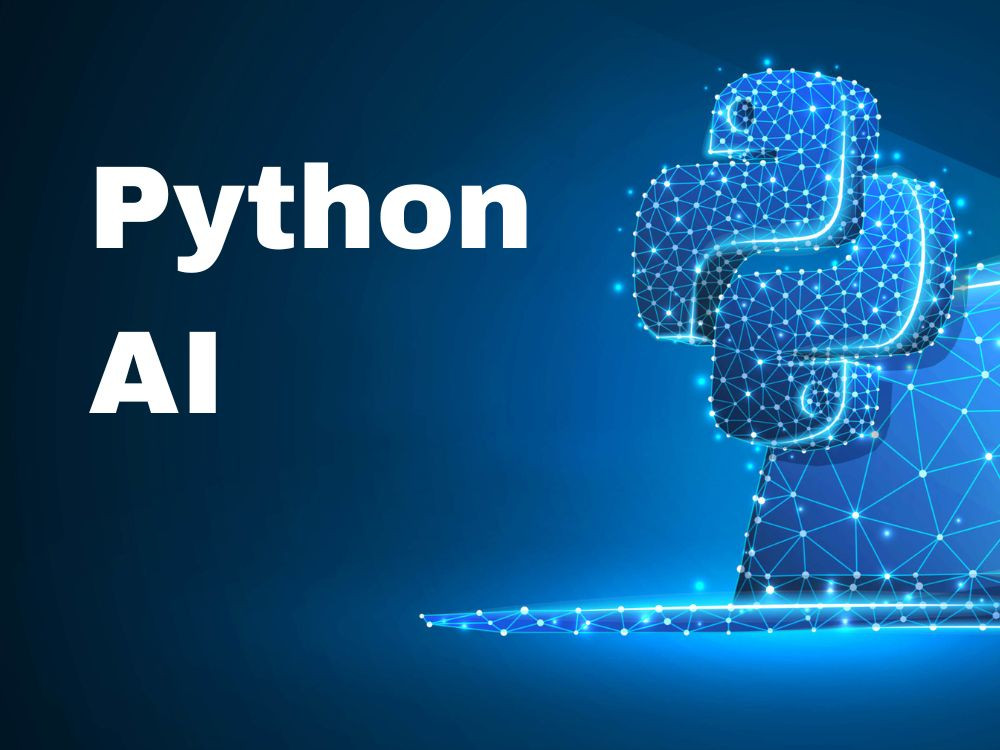
AI is revolutionizing the world industry, and Python is one of the most preferred programming languages to create AI systems. The popularity of Python AI development among beginners and professionals is due to the simplicity, power, and the support of numerous and advanced machine learning libraries.
Python AI tools are used to create intelligent systems in many technology companies and research institutions. Google and Microsoft run Python-based artificial intelligence systems, which assist developers in designing applications to analyze information, automate processes, and make predictions through machine learning.
Python AI development is one of the books that beginners want to learn when they are interested in artificial intelligence. The language has a clean syntax, powerful community, and extensive resources that simplify the process of enhancing complicated AI concepts and developing innovative projects.
Why Python Is Popular for AI
The growth in Python AI has been popular due to the simplicity and readability of the language. With the simplified syntax of Python programs and concepts of artificial intelligence, beginners can be taught the fundamental Python program structure and begin experimenting with the marvels of artificial intelligence in only a few hours without encountering complex programming syntax.
The other factor that makes Python common in the development of AI is the presence of robust libraries and frameworks. They can be used to ease the process of data analysis, training machine learning models, and neural network development and enable developers to concentrate on problem-solving instead of creating complicated code.
Python boasts of a good developer community that is constantly adding tutorials, open source libraries and documentation. This community ecosystem allows novices to rapidly locate answers and acquire best practices as they create AI applications to conduct research, business, and technology innovation.
Essential Python Libraries for AI
Python is the most widely used language used in the development of artificial intelligence, much of this is because of its vast array of libraries which make artificial intelligence coding easier. One of the most popular libraries is TensorFlow, which provides the means of creating and training machine learning models and neural networks to utilize AI to a greater extent. These include computer vision, natural language processing and predictive analytics.
Its research-scale and enterprise-scale properties are its scalability and ability to be deployed. PyTorch is another major library that is used by deep-learning researchers and developers. The dynamic graph of computation and adaptable design of PyTorch make it possible to experiment with complex AI networks, creating a new solution in AI prototyping and testing quickly.
Efficient AI development means that it must be able to work with big datasets. NumPy offers quick numerical computing and Pandas makes data manipulation, cleaning and analysis easier.
The combination of the two libraries lets developers pre-process data, experiment with patterns, and input quality inputs to machine learning models to find correct and effective AI solutions. These Python libraries are the core of creating the modern AI as it is simpler and more efficient to implement the complex AI tasks.
Steps to Start Python AI Development
The initial process in the development process of Python AI involves learning Python programming language. Variables, loops, function and data structure are basic concepts that beginners should learn before proceeding to the more advanced concepts of artificial intelligence and machine learning algorithms.
The second step after acquiring basic knowledge on programming is to learn the following fundamental topics of AI: data analysis, machine learning, and neural networks. The notions assist developers in knowing how smart systems learn data and make predictions or decisions.
Another practice, which beginners must do, is to create small AI projects. Low-end projects like prediction models, chatbots or data analysis systems, can enable developers to put theoretical understanding into practice and get familiar with Python AI frameworks and tools.
Tools and Environments for Python AI
Integrated development environments are commonly used by developers who write and test Python AI code and find them efficient. To simplify data visualization and documentation, programs like Jupyter Notebook enable programmers to write code, visualize the data and document it all in a single interactive environment.
Visual Studio Code is another user-friendly environment and is an effective coding, debugging, and AI project management tool. It is also popular among developers as it has the ability to use Python extensions and can be easily integrated with machine learning libraries.
Python AI development is also moving to cloud-based platforms. These services enable developers to execute elaborate machine learning models without the costly hardware investment, and thus the development of artificial intelligence is now open to novices and startups.
Benefits of Learning Python AI
The development of Python AI learning provides numerous career opportunities in technology and data science. In any business, companies in sectors are in need of professionals who can analyze data, design predictive models and establish smart systems that enhance business processes and decision making.
The second advantage is the capability of developing new solutions of real life issues. Developers of AI have the opportunity to create software in healthcare, finance, transportation, and education and assist organizations in automating their processes and finding useful insights in large volumes of data.
Creativity and continued learning are also encouraged by Python AI skills. With the development of the artificial intelligence technology, developers may discuss new frameworks, algorithms, and research fields that extend the possibilities of the modern computing and intelligent software systems.
Challenges Beginners May Face
Although Python AI development can be learner-friendly, new learners might still have difficulties working on complex algorithms and mathematical elements. Learning statistics, linear algebra, and probability cannot be an easy task and is required to master machine learning methods.
The other difficulty is on dealing with big data sets and calculations. The development of high-level models of AI can consume a lot of power or cloud computing which novices might require time to learn to effectively utilize.
Nevertheless, such difficulties can be conquered through practice and online courses as well as the support of communities. Numerous tutorials, discussion forums and learning sites assist novices to acquire the competencies necessary to make them successful Python AI programmers.
Conclusion
Python AI development offers an easy and efficient entry point to those who are interested in artificial intelligence. Python, with its easy syntax, large library, and deep community, enables computer programmers to experiment with machine learning and create intelligent software with ease.
Python AI tools can be used to develop innovative solutions in many industries, starting with data analysis and automation to predictive modeling. The simplicity of accessing structures and development platforms allows novices tasked with experimenting and attain viable AI capabilities.
In the era of artificial intelligence, when it is steadily influencing the future of technology, the development of Python AI can become an exciting prospect to students, researchers, and professionals. Learning Python and its AI tools, beginners can help the world of intelligent software and innovation to expand. Join the Cyprus AI Expo to explore Python AI from around the world. Visit Cyprus AI Expo today. https://www.cyprusaiexpo.com/