
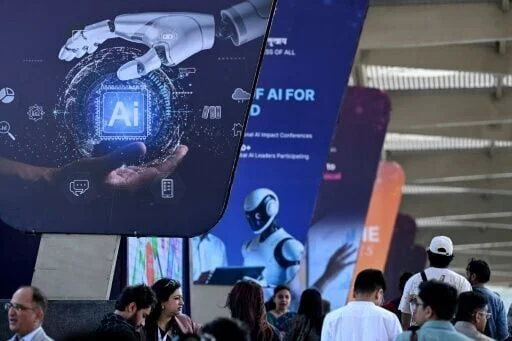
Generative AI Today: Highlights from Major Summits
Generative AI is now moving fast towards the status of enterprise-level technology rather than experimental. In the world of industries, organizations are capitalizing on artificial intelligence systems that have the capacity to produce text, images, audio, video, and code with astounding precision. These conferences serve to host the international innovators at all significant generative AI summits to showcase innovations, share strategic ideas, and discuss upcoming trends in AI-based creativity and automation.
Such summits are strong indicators of the current position of the technology and the future direction to follow. From sophisticated language models to enterprise deployment strategies, generative AI summits signify the trend forming the digital economy.
The Rise of Generative AI
Generative AI is a type of system that generates new content based on learning patterns using large amounts of data. This growing adoption can be attributed to the development of deep learning structures and large language models. Typically, the updates of their research and new model capabilities are announced at larger generative AI conferences by OpenAI, Google DeepMind, Microsoft, and Anthropic, among others.
These companies continue to develop AI systems in order to be more precise in their reasoning, easier to perceive the context, and sound in their response. The outcome of this is the creation of AI tools that can facilitate business workflows, content production, and knowledge management on a large scale.
Large Language Models Take Center Stage
The development of large language models is one of the core areas of interest in any generative AI conference. These systems drive conversational agents, writing applications and knowledge discovery systems, which are progressively integrated into business landscapes.
Recent advances focus on increased context windows, greater rational abilities, and less hallucinations. With the improved reliability of models, organizations are using them in legal drafting, financial reporting, customer communication, and technical documentation. The discussion at summits usually revolves around the process of balancing between innovation and reliability so that AI-based outputs can be of professional quality.
Multimodal AI Expands Capabilities
The development of multimodal systems is one of the most revolutionary tendencies that has been mentioned during generative AI summits. In comparison to the previous text-based models, multimodal AI is capable of processing and producing mixtures of text, images, audio, and video.
Such a development opens up possibilities. Textual prompts can be converted into visual campaigns made by marketing teams. AI-assisted rendering makes designers capable of creating prototypes. The teachers will be in a position to develop interactive teaching materials that are unique to the target audiences. Multimodal systems may become a significant move in the direction of making AI more adaptable and relevant to a large range of areas.
Integration and Adoption of Enterprises
Generative AI conferences put a lot of focus on practical enterprise use. As much as the public tools create a buzz, it is time that organizations need secure, scalable and compliant solutions. At the top, talk shows often discuss the way in which corporations can use generative AI in a responsible manner without compromising proprietary information.
Enterprise is looking into fine-tuning of the private model, strategic approach to deploying hybrid clouds, and integrations with existing platforms based on API. The key to successful AI adoption is governance structures and internal training programs. Generative AI leaders emphasize that technology will not be enough to succeed; strategic alignment and workforce preparedness are also important.
Infrastructure and Scalability Problems
With the rise in the capabilities of generative AI models, the requirements of infrastructure rise. The implementation and education of massive AI systems require the application of sophisticated computational power. The innovations of the companies such as NVIDIA and Amazon Web Services are often featured in generative AI summits and promote the infrastructure of scalable AI.
Models can be trained more quickly and inferred at extremely low costs using high-performance GPUs, AI accelerators, and the optimization of cloud platforms. The issue of energy efficiency gains increasingly more and more attention, as the sustainability becomes a strategic factor. Locating the balance between the computational and environmental responsibility is emerging as one of the major themes of AI ecosystem.
Responsible AI and Ethical Reflections
Ethics is at the center of the discussions of generative AI summits. An increasing number of concerns about misinformation, intellectual property, bias, and data privacy are increasing as AI systems gain the ability to operate. Players in the industry partner to create responsible AI systems that encourage transparency and responsibility.
Regulation development is also addressed in detail. Companies want to understand and know what is expected of them in terms of compliance and retain their innovativeness. Best practices in responsible deployment are important in developing trust with customers and other stakeholders to make sure that generative AI is a good influence in society.
Changing the Creative Industries
One of the first creatives to utilize generative AI technologies is the creative professionals. Demonstrations at large generative AI conferences tend to demonstrate how AI can help in graphic design, video creation, scripting, and music creation.
Instead of substituting human creativity, generative AI is a collaborative product. AI can be used by designers to make brainstorming faster, and by filmmakers to create visual effects generated by AI. The adoption of generative AI in the creative process points to the move to hybrid human-AI cooperation.
Influence on Software Development
Another area that is undergoing a radical transformation is software engineering. AI-based code generators aid in code writing, debugging and optimization by computer programmers. These tools minimize repetition of tasks as well as documentation procedures.
During generative AI conferences, the topics of productivity and security advancements made possible by the AI-based coding systems are frequently discussed. The businesses that have implemented these solutions have reported the acceleration of the development process and the high quality of the software. The software development will continue to utilize AI models, which will continue to gain more advancements.
Industry-Specific Applications
Generative AI is becoming more industry-specific. AI is applied in healthcare by providers to use automated documentation and synthesize research. Generative systems are used by financial institutions to analyze risks and report regulatory. Compliance Retail businesses use AI to give customized descriptions of products and promote them.
Schools consider AI tutoring systems capable of changing according to an individual’s learning needs. Generative AI is implemented in predictive maintenance systems and the design process in manufacturing organizations. These specific applications exemplify the generative AI applicability in economic domains.
Investment and International Cooperation
Generative AI summits are also places of networking with startups, investors and pre-existing businesses meeting. The venture capital firms are very vigilant to the new technologies displayed at such events and spot the potential successful innovations with disruptive potential.
The partnerships between academic and government and private enterprises accelerate the process of research and commercialization. The AI ecosystem continues to expand worldwide, and new participants introduce new spheres of knowledge and technologies.
Emerging Trends Shaping the Future
In the future, there are a number of trends highlighted in generative AI summits. The researchers are working on smaller and more efficient models that can sustain their performance and reduce their computational needs. Individual AIs that can analyze personal preferences are getting smarter.
The system of cross-modal thinking and adaptive AI tools used in real-time should become more user-friendly. The AI generation is maturing and systems will be more natural, proactive, and embedded in the business processes.
Conclusion
Generative AI is no longer an effective experiment, but rather a disruptive phenomenon that is reshaping industries worldwide. Large generative AI conferences provide an overview of the direction that the technology is taking, and it all include state-of-the-art language models up to methods of multimodal intelligence and enterprise integration.
The perspectives expressed at this type of event reflect a future where AI-created content and automation will be gradually built into the work routine. Companies that approach generative AI with social responsibility, invest in scalable infrastructure, and focus on ethical values will be the next generation of digital transformation.
With the further growth of the pace of innovation, the generative AI summits will continue to play a significant role as a guide to the future of artificial intelligence worldwide.